Why a TMS for Freight Brokers Is No Longer Optional
The changing role of the freight broker
Freight brokers have always walked a tightrope. On one side sits the shipper who wants their goods moved at a specific rate and within a narrow window. On the other side sits the carrier who needs clear instructions, prompt payment, and a reason to keep coming back. For decades, the broker's toolkit consisted of a phone, a spreadsheet, and a thick Rolodex of carrier contacts. That model worked when margins were fat and lanes were predictable. But the industry has shifted.
Today, brokers manage more loads per person than ever before. Shippers expect real-time visibility into where their freight is, and carriers expect faster communication and quicker settlements. A broker who still relies on manual processes will eventually drop a ball, a missed update, a double-brokered load, a late delivery that could have been avoided. That is where a modern TMS for freight brokers lunetms enters the picture. It is not just software. It is the operational backbone that lets a broker scale without burning out their team.
What a TMS actually does for a broker
A transportation management system, or TMS, automates the repetitive parts of the broker workflow. Think about what a typical day involves: receiving a rate request, checking available carriers, sending out a load tender, tracking the pickup and delivery, updating the shipper, and then handling the billing. Each step might take only a few minutes, but across fifty loads a day those minutes add up to hours of manual work.
A well-designed TMS centralizes those steps. It pulls in rate quotes from multiple carriers, organizes them on a single dashboard, and lets the broker assign a load with a few clicks. It then tracks the load through electronic logging device (ELD) integrations or carrier-provided updates, and sends automatic notifications to the shipper. The broker does not have to chase down statuses. The system does the chasing. That frees up time to build relationships, negotiate better rates, and handle the exceptions that always crop up.
Visibility is the new currency
Shippers have grown accustomed to the kind of tracking they get from Amazon or Uber. They want to know where their freight is at any given moment, not just when the broker remembers to call the driver. A TMS that integrates with carrier tracking systems gives the broker that visibility without extra effort. The broker can log in, see the map, and send a status update to the shipper in seconds.
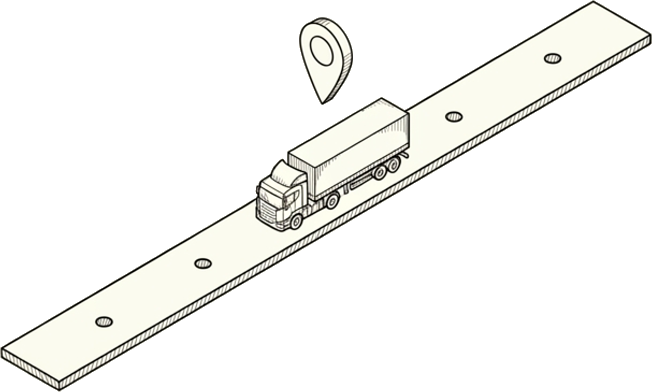
This matters more than most brokers realize. In a competitive market, the broker who can offer consistent, accurate tracking wins the shipper's trust. The broker who says "I'll call the driver and get back to you" loses ground. A good TMS turns visibility into a standard feature of the service, not a luxury add-on.
Automation without losing the human touch
Some brokers worry that automation will make them replaceable. The opposite is true. When a TMS handles the routine tasks, the broker can focus on the parts of the job that require judgment, negotiating a rate when capacity is tight, smoothing over a dispute between a shipper and a carrier, choosing which carrier to trust with a high-value load. Those are human skills. A TMS does not replace them. It clears the desk so they can happen.
For example, one broker I worked with used to spend the first two hours of every morning calling carriers to confirm pickups. After they adopted a TMS for freight brokers lunetms, those confirmations happened automatically. The broker used that time instead to call three shippers and ask about upcoming loads. Within a month, their booked volume rose by fifteen percent. The system did not add loads. It gave the broker time to find them.
What to look for in a TMS
Not every TMS is built for the broker workflow. Some systems are designed for carriers, focusing on dispatch and driver management. Others are built for large shippers with dedicated logistics teams. A broker needs something different. Here are a few things to consider:
- Carrier integration. The TMS should connect easily with the carriers you already use, whether through API, EDI, or simple email-to-load-board links. If onboarding a new carrier takes more than a few minutes, the system is too rigid.
- Automated rate management. You should be able to store contracted rates, compare spot quotes, and build rate confirmations without rekeying data. Manual rate entry is where errors happen.
- Real-time tracking. Look for ELD or GPS integration that updates load status without requiring the carrier to call in. The shipper expects this, and you should too.
- Billing and settlement tools. A TMS that generates invoices, tracks payments, and handles carrier settlement saves hours of back-office work. Some brokers overlook this until they are buried in paperwork.
- Scalability. The system should handle more loads as you grow, without per-load price spikes or complicated upgrades. You do not want to switch platforms six months from now.
Common mistakes brokers make when choosing a TMS
One mistake is buying a system that tries to do everything. A TMS with built-in accounting, customer relationship management, and document management sounds great on paper, but in practice it often means mediocre performance in every area. A better approach is to pick a TMS that excels at the core dispatch and tracking workflow, and then integrate it with a dedicated accounting tool if needed.

Another mistake is ignoring the user experience. If the system is clunky and requires clicking through five screens to tender a load, your team will resist using it. The best TMS is one that people actually use. That means clean navigation, fast load times, and mobile access for those moments when you are away from the desk.
Finally, some brokers assume that a TMS is only for large operations. That is not true. Even a solo broker handling ten loads a week can benefit from automation. The time saved on tracking and paperwork pays for the subscription cost many times over.
Making the switch without disrupting your operation
Transitioning from spreadsheets to a TMS does not have to be painful. Start with a pilot. Pick one lane or one customer and run their loads through the system for a couple of weeks. Work out the kinks while the rest of your operation stays in its familiar rhythm. Once the pilot runs smoothly, expand to more lanes.
Most TMS providers offer onboarding support and training. Take advantage of it. Assign one person on your team to become the internal expert. That person can answer questions, spot workflow improvements, and keep the rest of the team aligned. The goal is not to flip a switch and change everything overnight. It is to build a new habit, load by load.

The bottom line
Freight brokerage is a relationship business, but relationships alone cannot keep up with the speed of modern logistics. A TMS for freight brokers lunetms gives you the operational efficiency to deliver on your promises without burning out your team. It turns data into action, frees up time for the work that matters, and helps you compete with larger brokerages that already have these tools in place.
The brokers who thrive in the next five years will be the ones who adopt technology early and use it wisely. The ones who wait will find themselves caught between shippers who demand more and carriers who have better options. A TMS is not a silver bullet. It is a practical tool that makes the broker's job easier, more profitable, and more sustainable. That is worth a serious look.
 LinkedIn
 Facebook
 Instagram
 YouTube